Daniel Mezger

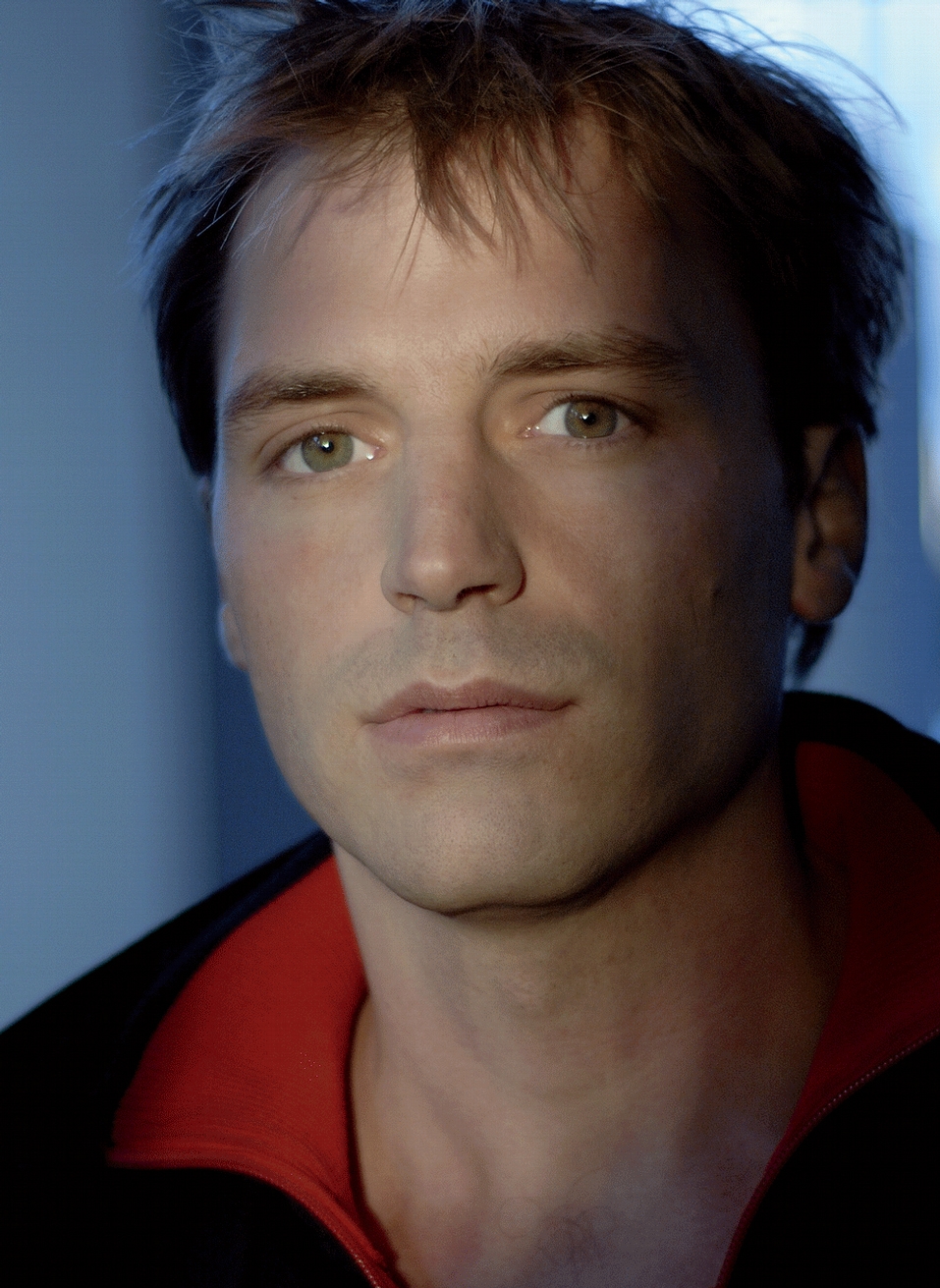
Daniel Mezger was born in 1978 and grew up in the Glarus Alps. He trained as an actor at the Academy of Music and Theatre in Berne and from 2001 worked at the Junges Theater Göttingen for several years. Since 2004, he has been working as a freelance author, actor and musician in Zurich. He studied at the Swiss Literature Institute in Biel and is the lead singer of A Bang And A Whimper.
In 2008, Daniel Mezger took part in the Swiss Young Authors’ programme Dramenprozessor as well as in the Burgtheater’s Authors’ Workshop. With his play Findlinge he took part in the Heidelberger Stückemarkt; the play also won the Prize for Dramatic Writing of the Swiss Authors‘ Society. Balkanmusik in the production of the Staatstheater Mainz was invited to the Berlin Autorentheatertage. The play was also produced in Berne and Zurich amongst others. He participated in the Bachmannpreis 2010 with his novel Land spielen which was published in 2012. His play Als ich einmal tot war und Martin L. Gore mich nicht besuchen kam premiered in its „unplugged“ version at the Schauspielhaus Vienna in 2014 and in its „remastered“ version in a coproduction which toured several theatres in Switzerland and Germany in 2015.

Daniel Mezger was born in 1978 and grew up in the Glarus Alps. He trained as an actor at the Academy of Music and Theatre in Berne and from 2001 worked at the Junges Theater Göttingen for several years. Since 2004, he has been working as a freelance author, actor and musician in Zurich. He studied at the Swiss Literature Institute in Biel and is the lead singer of A Bang And A Whimper.
In 2008, Daniel Mezger took part in the Swiss Young Authors’ programme Dramenprozessor as well as in the Burgtheater’s Authors’ Workshop. With his play Findlinge he took part in the Heidelberger Stückemarkt; the play also won the Prize for Dramatic Writing of the Swiss Authors‘ Society. Balkanmusik in the production of the Staatstheater Mainz was invited to the Berlin Autorentheatertage. The play was also produced in Berne and Zurich amongst others. He participated in the Bachmannpreis 2010 with his novel Land spielen which was published in 2012. His play Als ich einmal tot war und Martin L. Gore mich nicht besuchen kam premiered in its „unplugged“ version at the Schauspielhaus Vienna in 2014 and in its „remastered“ version in a coproduction which toured several theatres in Switzerland and Germany in 2015.

Theatre

Daniel Mezger

Bauchlage

2 F, 2 M

Lea turns thirty. Of all things. No life plan and no child in sight. Does she want to keep going at all? Become a mother? Be like her mother? She is still not quite independent, although she now lives abroad. Micha tries to calm herself, but soon guests come, and before that her mother calls. The doctors have discovered something, it could be bad. "She always knows when to call." Lea goes back to the mother. And stays. Three weeks later, Micha follows her. "At last I get to meet you. Doris. Just call me Doris." Doris is nice, very nice, and takes good care of her child, takes good care of her guest, is glad that there are those who can be taken care of again. Isn’t she herself ill?
Even after three months, Micha can not persuade Lea to return to the city. Lea's concentration on the relationship with her dominant, overbearing, but also needy mother turns Micha into a marginal figure. "We are always only one thing: mother and daughter. The tasks are distributed. Uneven but fair." Lea is not doing so well. Lea wants to go home, but she does not know where that is. Lea has a stomach ache. Since she has arrived here, she has no longer felt like herself, she no longer even has her period.

DORIS: You're pregnant. A mother can see that. It's much too early.
LEA: I'm not. No. It’s just the scrambled eggs that don’t agree with me.

Lea does not come back. Micha can not cope with her. But her mother is finally a mother again and not just a woman. A woman like the daughter, who can be a child again. Back to the abdomen. Back to the mother's belly. (Daniel Mezger)

In his piece Bauchlage, tthe young author Daniel Mezger describes, in a pressing but also finely comical way, the fears of a young woman about the final stage of growing up, and her failure in the face of her relationship with her mother.
Theatre

Daniel Mezger

Findlinge

2 F, 3 M

"Horror films begin like this" - A small gas station somewhere in the north. Winter. The last bus has left the village before the long night begins. Only the elderly remain and defy the winter in front of their TVs. But now, a young woman does not want to take the last bus. Joana has taken care of the gas station during the summer, knows the place from before. She does not want to return to the city and to the life that she led there. She wants to stay here, wants to find herself. Luke, one of the old people, tries to dissuade her from her plan:
"You're too young for such a night. The night is too long. "

It will disturb the order of the place, will disturb their well-earned rest. But she is not the only one who doesn’t want to go, because there is someone else who does not want to take the last bus. A young man suddenly appears, a man whom no one knows and who does not speak to anyone. The bus leaves, the long night begins. The mysterious stranger comes forward. Joana is torn – is he disturbing her self-chosen solitude, or is he the man with whom she could be happy? And if so, how does happiness work? The frivolous old Josephine is enchanted by what she regards as a secret love story, Luke is jealous and worried about Joana, and Markus, the shopkeeper, has his own explanation for the presence of the stranger who makes him nervous. Things have reached the tipping point.

Daniel Mezger focuses on a young woman's search for herself and also creates wonderful roles for three old actors. A piece, laconic, dark, oblique, and at the same time, a sort of love story.

Production history

Digitales Textbuch