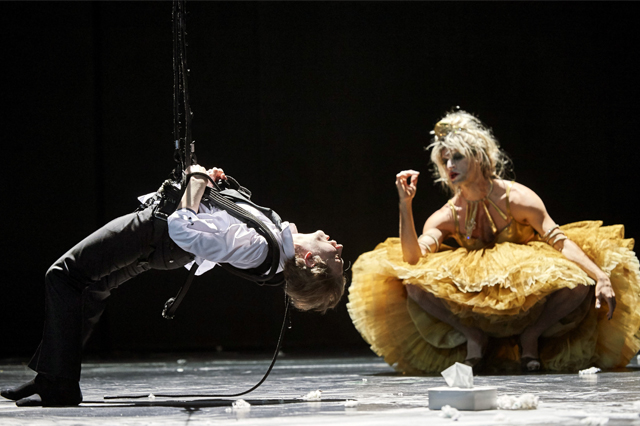
Schnitzler's Reigen depicts the hypocritical sexual morals of a late century, showing what should not be shown. Only to be banned from being shown on stages for a long time. But that is long past, we live in a liberal and tolerant society. "Anything goes" has freed people of the 21st century from all constraints.
Has it not? Are we still driven by a power that is not an external dictate but an inner one? What brings us together, drives two people for a short moment, for the length of one scene, into the arms of the other? To find what there? Comfort, confidence, power, freedom? Is there even love in the end, when love is made? In Roland Schimmelpfennig's treatment of the round dance, the figures become entangled in each other and take turns, and they all seem dangerously familiar. Sometimes they offer comfort, sometimes they give themselves, they are cynics, power-hungry and vulnerable. Victims and perpetrators - and sometimes both at the same time. It is an eternal dance. Only the music is different.
"It is striking how often Schimmelpfennig quotes war metaphors, how he draws disturbing pictures in which he reveals the sexual connotation of violence and destruction, playing with the seductive fascination of crossing borders. (...) Schimmelpfennig exposes male sexual fantasies and tells of men's fear of losing control. He describes clear situations of abuse of power and sexualised violence against women. But he also shows the ethical grey areas and their emotional ambivalences. (Ingoh Brux on Siebzehn Szenen aus der Dunkelheit in Theater heute Yearbook 2020)